
When large or heavy cargo is being transported, effective securing is critical. However, when that cargo is enclosed inside a case, an important question arises: What are we actually securing? The case, or the cargo inside it? This is a question that can have significant implications for the way cargo is packed, lashed, and transported.
At DS Oram & Associates, we regularly encounter cargo that is substantial in weight, dimension, or both. When that cargo is enclosed within a case, the surveyor’s ability to assess and approve the securing arrangement can become considerably more complex.
Distinguishing between case and crate
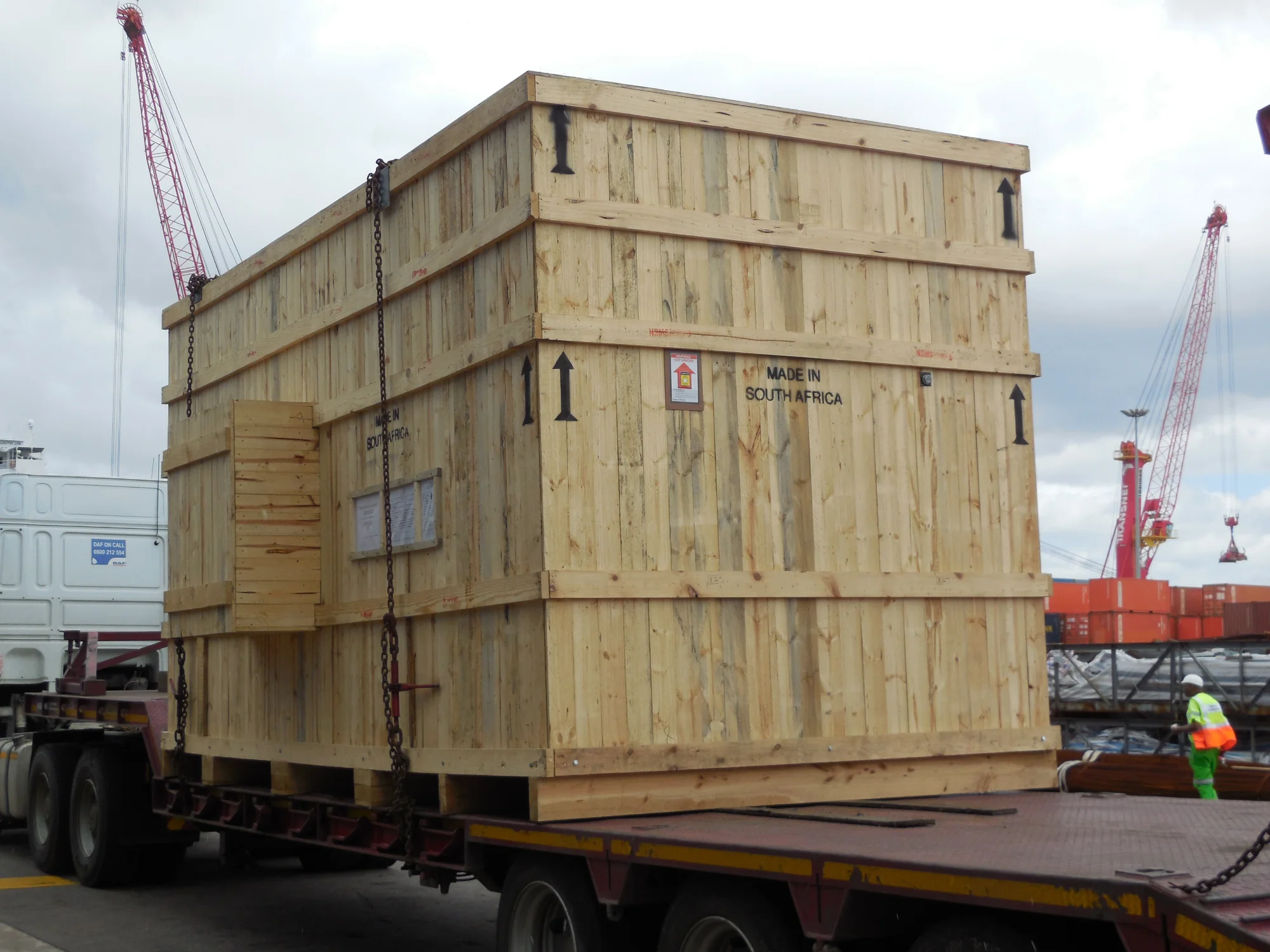
It is useful first to distinguish between a case and a crate. A case typically has solid sides, a solid base, and a solid roof. This means that the cargo inside is not visible once packing is complete. A crate, by comparison, will generally use timber slats, allowing at least some visibility and access to the cargo. Depending on the cargo and packaging design, it may have either a solid or slatted base.
For survey purposes, this difference matters. Where an item has been completely enclosed inside a solid case, the surveyor may have little or no visibility of how the cargo itself has been secured internally.
The challenge of securing a sealed case
When the contents of a case cannot be seen, several questions immediately arise:
- How has the cargo been secured to the base of the case?
- How strong are the case walls and roof?
- Are the base bearers suitable for the loads that may be placed on them?
- Are suitable securing points available on the cargo itself?
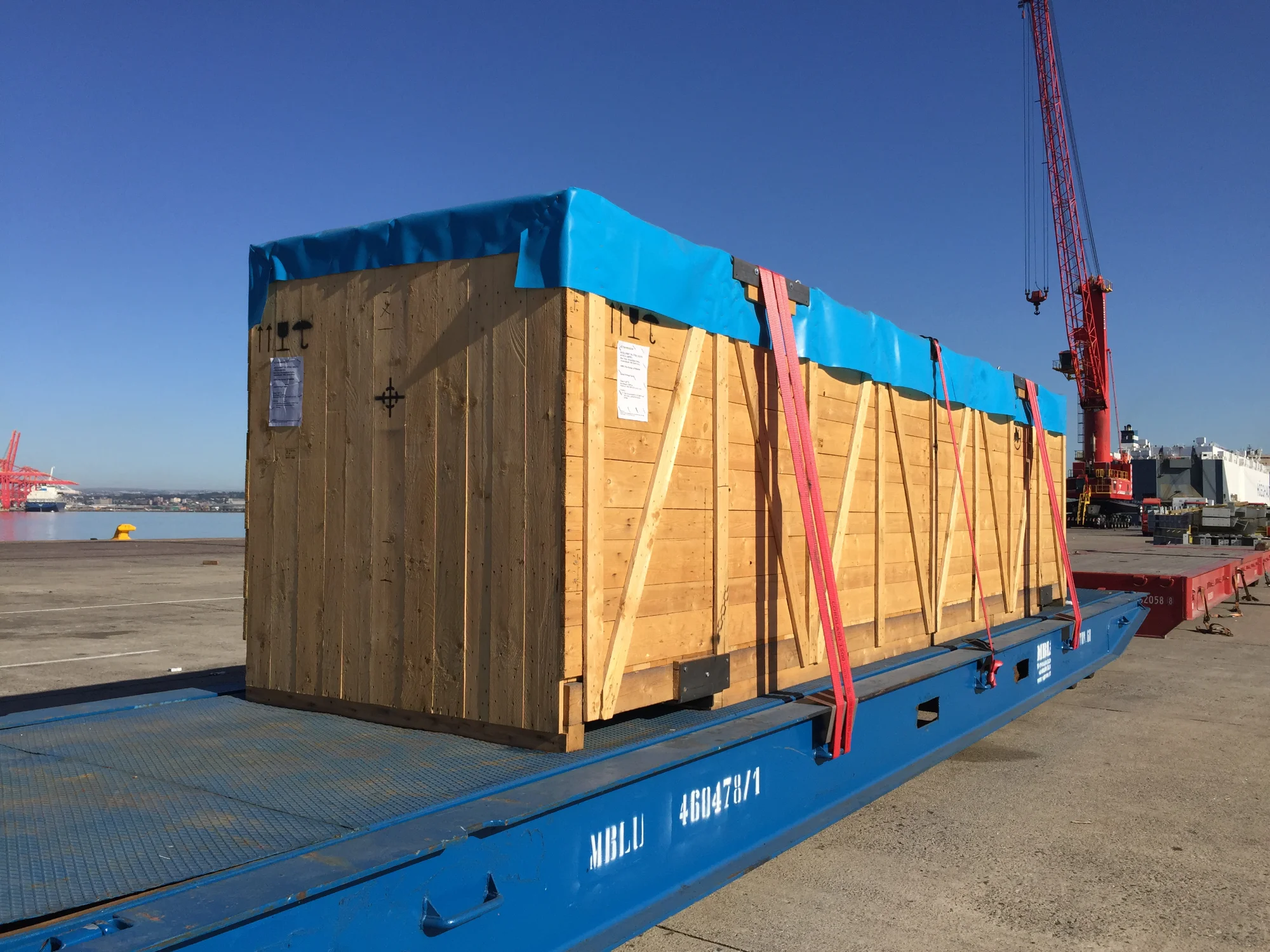
If these considerations were not addressed during the packing stage, options can become limited once the case arrives for transport. A common approach is to pass straps or chains over the top of the case and connect them to securing points on a road trailer or flat-rack container. Additional measures may also be used to prevent the case itself from shifting.
The difficulty is that these arrangements primarily secure the case to the mode of transport. The safety of the cargo inside may still depend entirely on the way in which it was secured to the case base before the case was closed.
Securing the cargo, not simply the packaging
This distinction becomes particularly important when the cargo is heavy. The purpose of the case is principally to protect its contents. Ideally, it should not have to become part of the primary securing arrangement for the cargo itself. If the case is restrained but the machinery or equipment inside it is not adequately secured, sudden movement or changes in force may still allow the cargo to move independently within the case. An object in motion will continue to move unless the forces acting on it are properly controlled. Effective securing therefore needs to address the cargo itself.
Where possible, securing materials should connect suitable securing points on the machine or cargo directly to the relevant securing points on the trailer, flat-rack, or other mode of transport. This allows the securing arrangement to control movement of the actual cargo, while the case performs the function for which it was intended, which is to protect the item during transportation.
Why involving the surveyor early on helps
In our experience, the most effective way to address this issue is before the cargo has been fully packed. Increasingly, clients involve DS Oram & Associates during the planning phase so that the proposed packing and securing arrangements can be considered before the case is constructed and closed.
This allows us to work alongside the nominated packaging provider and advise on practical considerations such as how the machine or cargo should be secured to its base, where suitable securing points are available on the cargo, where access hatches may need to be incorporated into the case, or whether the proposed packaging design will allow the cargo to be safely secured once it is ready for transport.
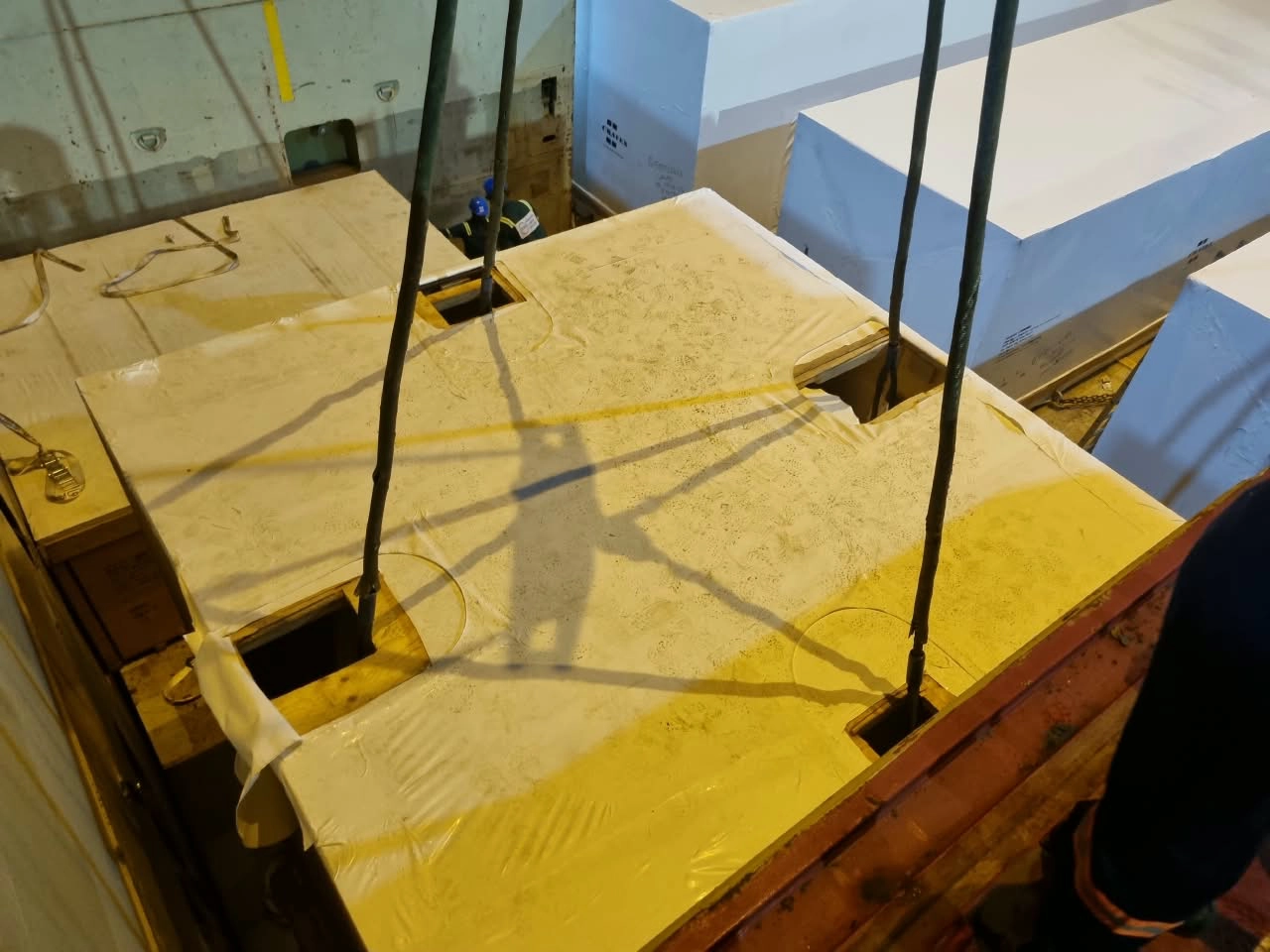
Creating appropriately positioned access points can make a substantial difference. Rather than relying on straps or chains passing over the outside of the case, securing materials can be applied directly between the cargo and the transport unit. The result is a more effective securing arrangement, with clear separation between the role of the packaging and the role of the lashing.
When we are appointed after the planning stage
Where a fully enclosed case arrives for survey without suitable access to the cargo or information about the internal securing arrangement, the surveyor may be unable to verify whether the cargo itself has been adequately secured. In these circumstances, the scope of a lashing survey may need to be limited. This is not simply a matter of documentation. If the surveyor cannot see or verify the internal arrangement, it may not be possible to provide meaningful assurance regarding the securing of the cargo inside the case. Early planning avoids this problem.
Making cargo securing part of the packing process
For complex, heavy, or high-value cargo, securing should not be treated as something that happens only once the packed item reaches the trailer, container, or vessel. It should form part of the packaging and transport planning process from the outset. By considering the eventual lashing arrangement before the case is built, the packaging provider, cargo owner, transporter, and surveyor can work collaboratively towards a solution that protects the cargo while also allowing it to be properly restrained during transport.
At DS Oram & Associates, we can work with your nominated packaging service providers during the packing process, and ideally, be in consultation with service providers before case construction begins. This gives us the opportunity to advise on the proposed arrangement and help ensure that the safe securing of the cargo remains front and centre throughout the process.
If you are planning the transport of large, heavy, or cased cargo, contact DS Oram & Associates to discuss survey, lashing, and cargo securing requirements before packing begins. We would be glad to assist with the planning ahead of the survey.